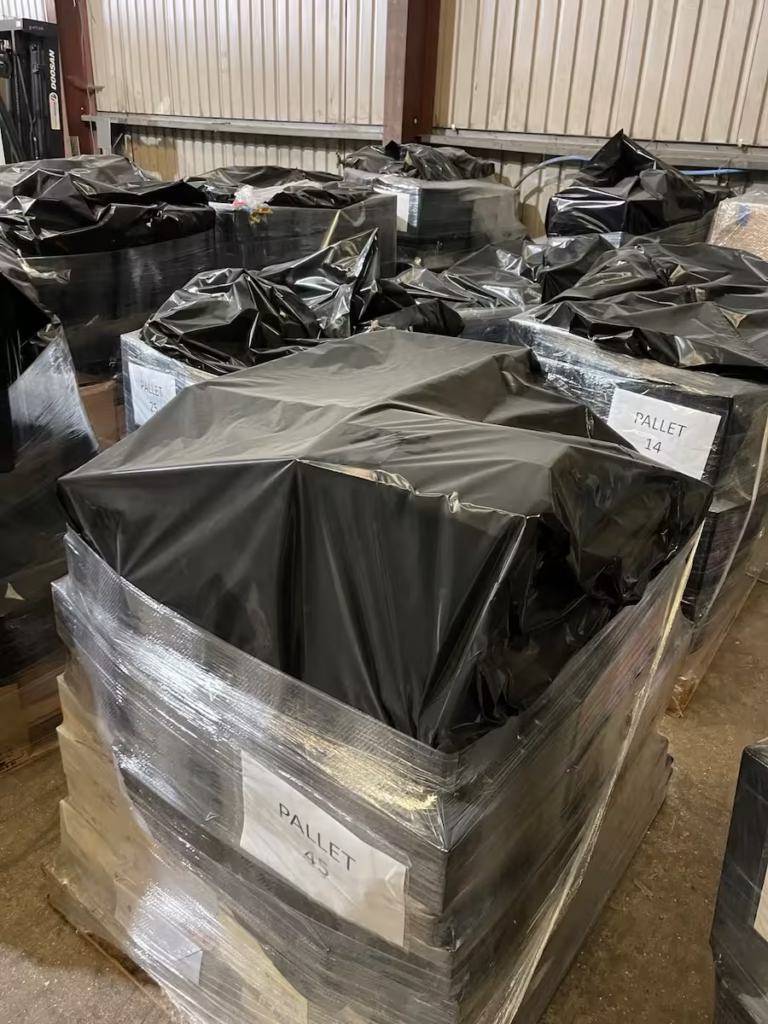
Pallet Wrapping Machines: Fast Asset Purchase

When equipment reaches the end of its working life for one business, it often still has real value to another.

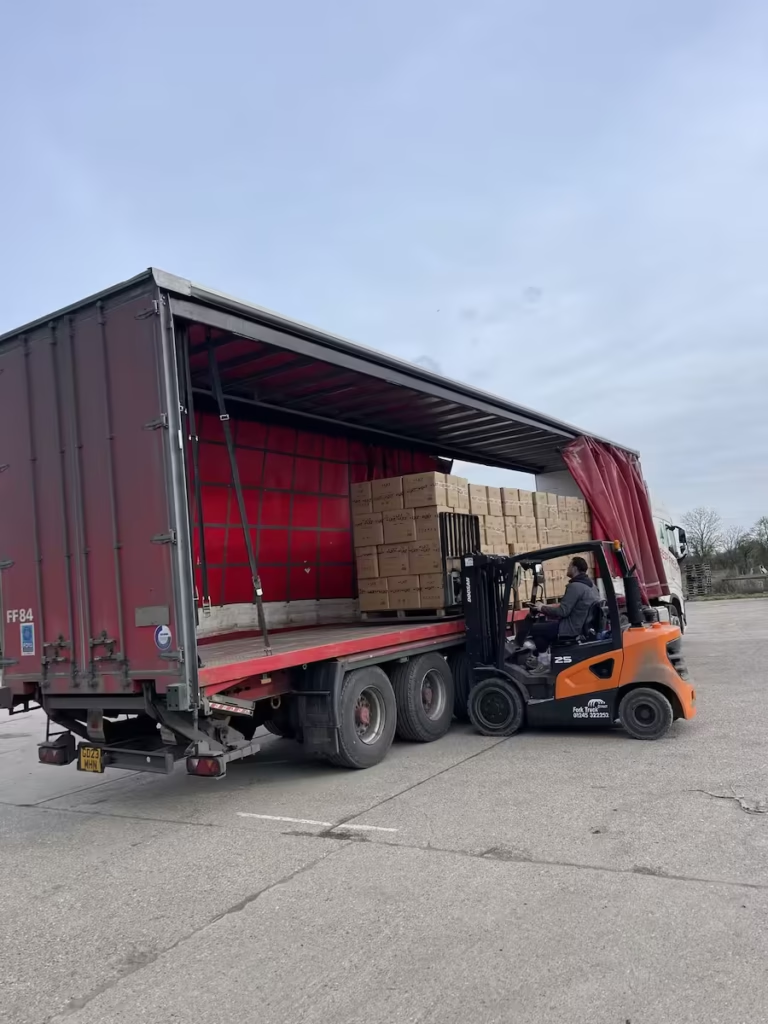
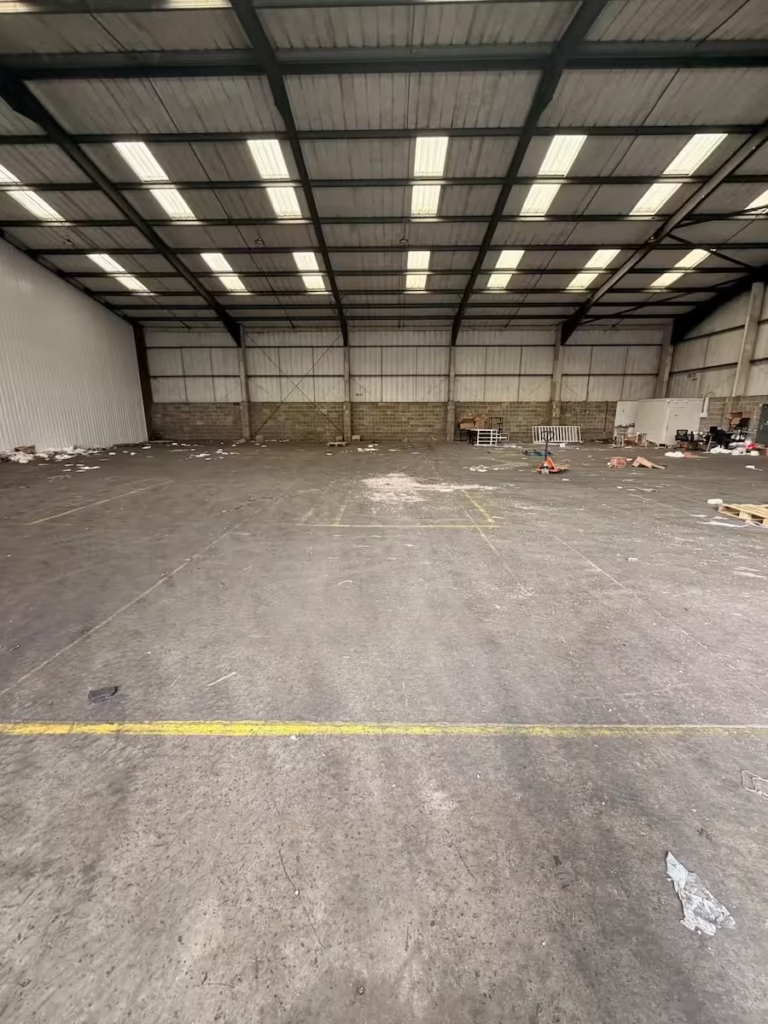
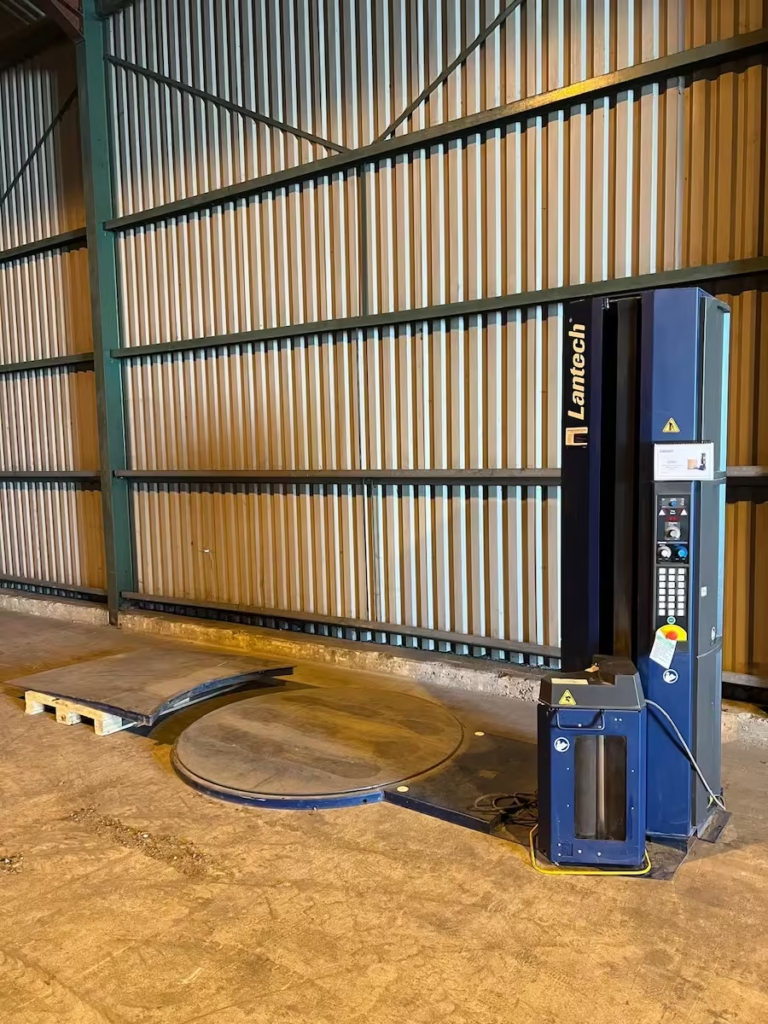
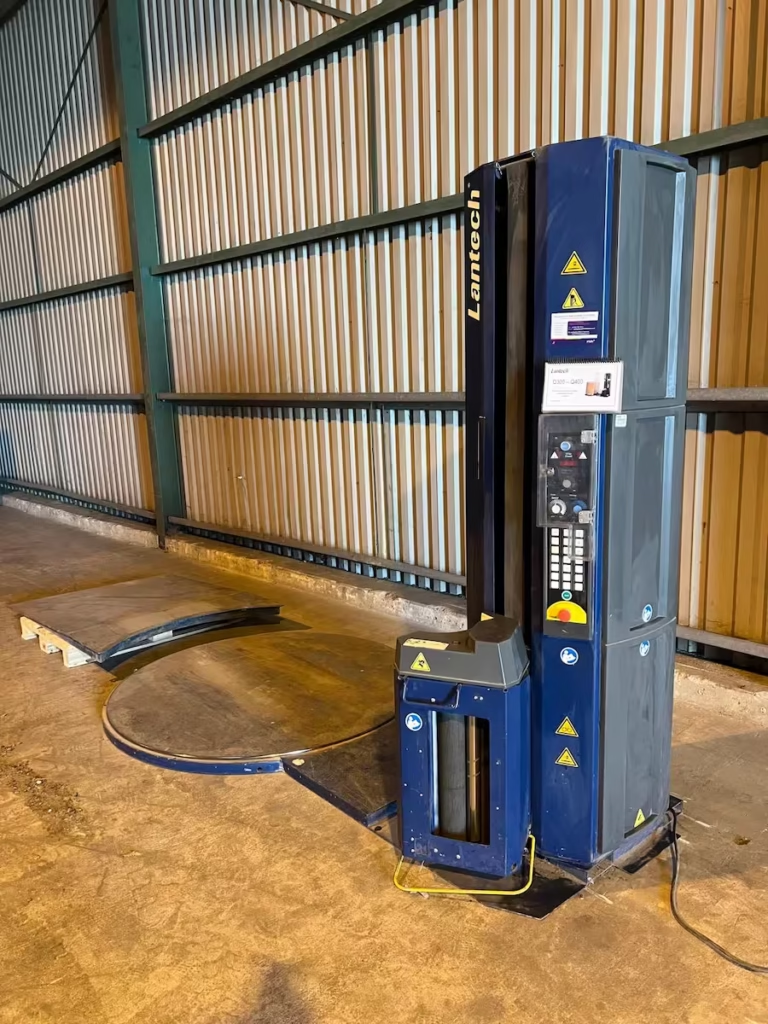
Our client had four industrial pallet wrapping machines they no longer needed in their warehouse. The machines had done their job, but keeping them tied up valuable floor space and created a disposal question nobody wanted to spend time on. Rather than list them for sale, field enquiries, arrange viewings and wait for an auction to run its course, they wanted a faster route. They came to us for a valuation and a clean, quick sale.

Quick Facts

  • Equipment purchased: 4 industrial pallet wrapping machines
  • Purchase model: Outright cash purchase at valuation
  • Payment: Immediate
  • Collection: Arranged nationwide at a time to suit the client
  • Timeline: Valuation to collection within days
  • Space reclaimed: Immediately

Why Selling Equipment Yourself Takes Time

Most businesses in this position run into the same friction. Auctions take weeks to schedule and the final price stays uncertain until bidding closes. Buyers usually collect on their own timeline rather than yours. Private listings mean handling a stream of enquiries and coordinating viewings around your working day. Bring in a broker and you've added another intermediary who takes a margin and stretches out the process.

What our client actually needed was certainty of value, speed of collection, and a single point of contact to handle the whole thing.

The Solution

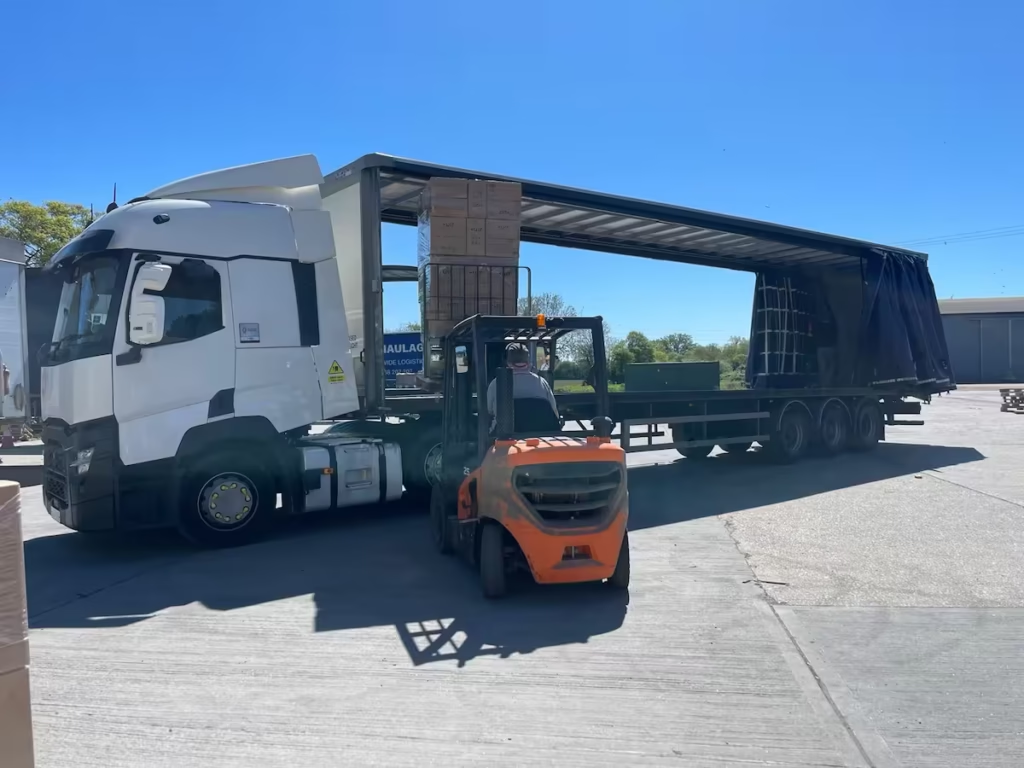
We provided a competitive valuation for all four machines, purchased them outright at that price, and made immediate payment. Collection was arranged around what suited the client, and the machines were professionally loaded and transported for their next destination without delay.

No listing fees. No auction waiting period. No uncertain final price. No juggling multiple buyers. One conversation, one offer, one collection date that actually happened.

The Outcome

The client recovered value from equipment they no longer needed and reclaimed the warehouse space straight away. The machines moved into our network of buyers and resellers who were actively looking for exactly this kind of equipment. A straightforward transaction that worked for everyone involved.

The Warehouse Equipment We Buy

We purchase a wide range of surplus industrial equipment across the UK. Whether you're replacing machinery, relocating, closing a site, or releasing capital tied up in unused assets, we can make a competitive offer and arrange collection.

Our buying regularly covers pallet wrapping and stretch wrapping machines, warehouse machinery and material handling equipment, pallet racking, conveyor systems, packing benches and equipment, forklifts, industrial shelving, and complete warehouse liquidation stock. We buy single machines or entire warehouse contents.

Have Warehouse Equipment to Sell?

If you're looking to move on warehouse machinery, equipment or assets, we can provide a fast valuation and arrange nationwide collection. Whether it's a single item or complete warehouse contents, get in touch with us today for a free valuation.

Kubota Mini Excavator: Fast Plant Purchase

Not everything we buy comes on a pallet. We also purchase plant and machinery directly from businesses and individuals across the UK.

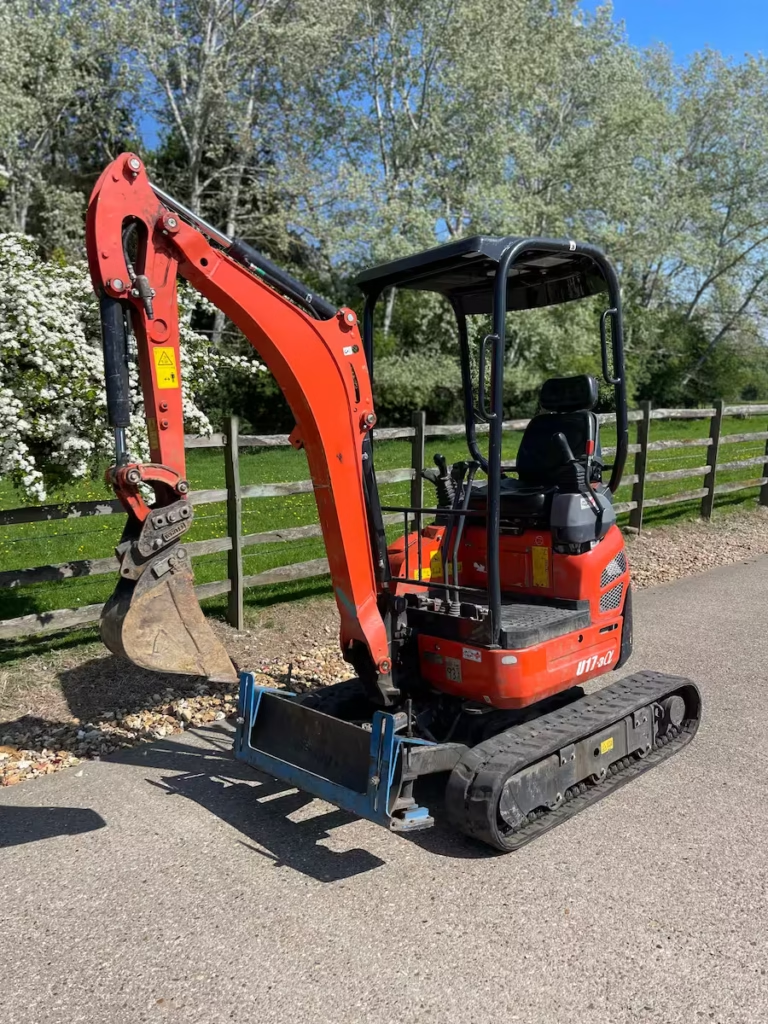
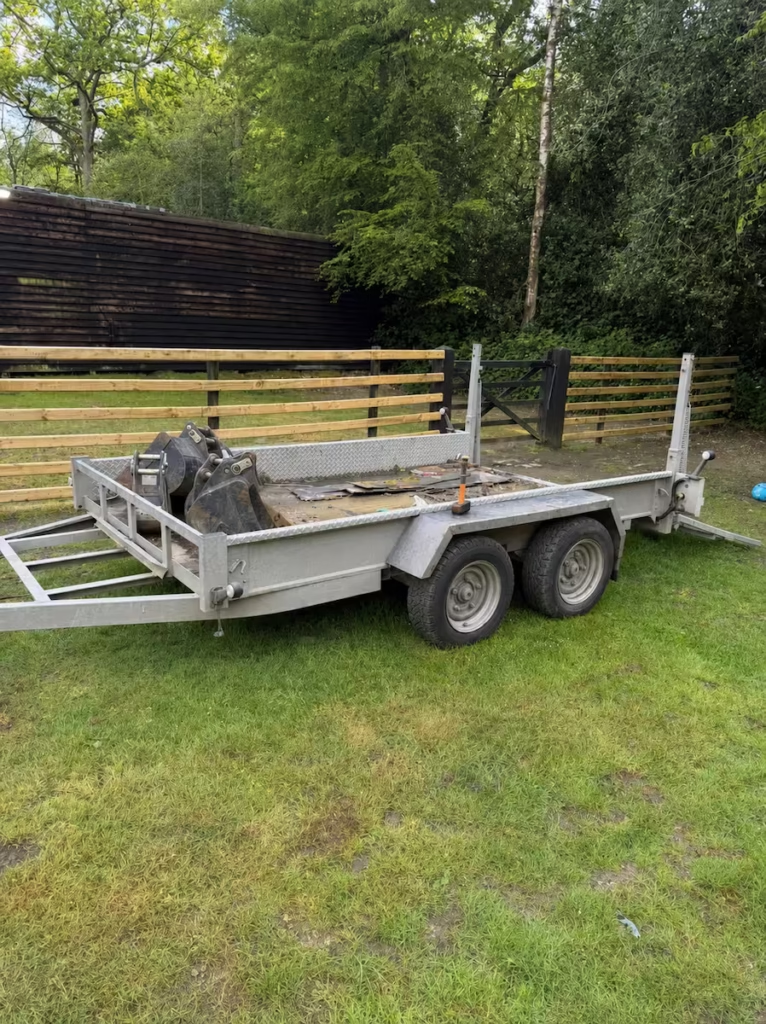
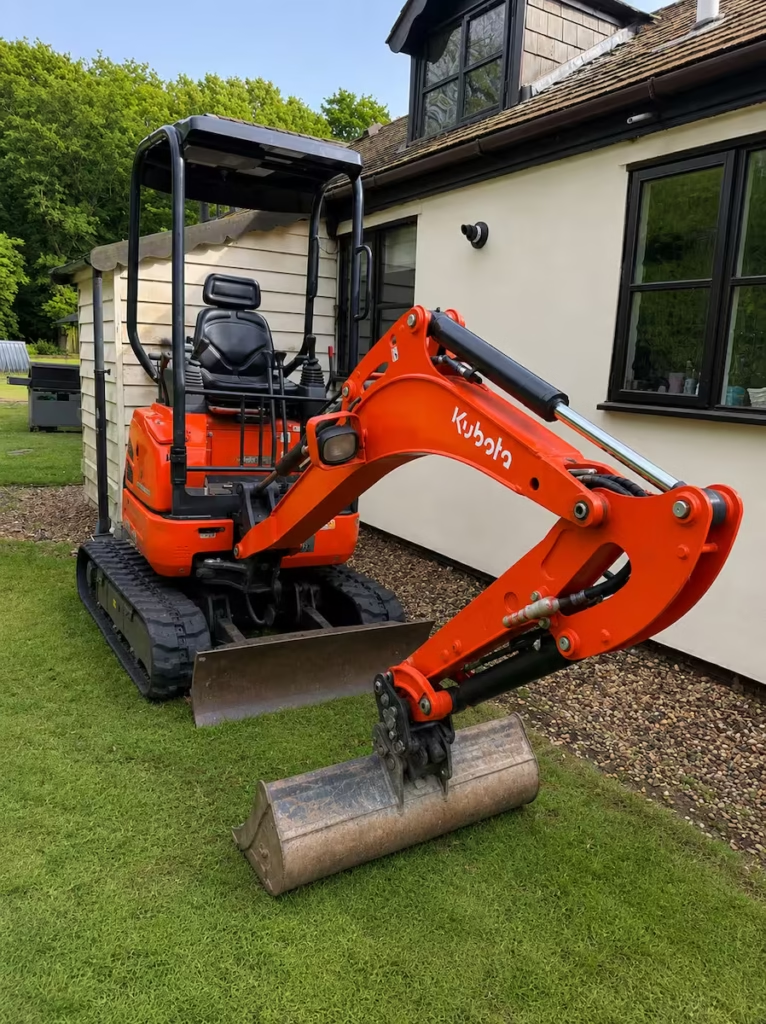
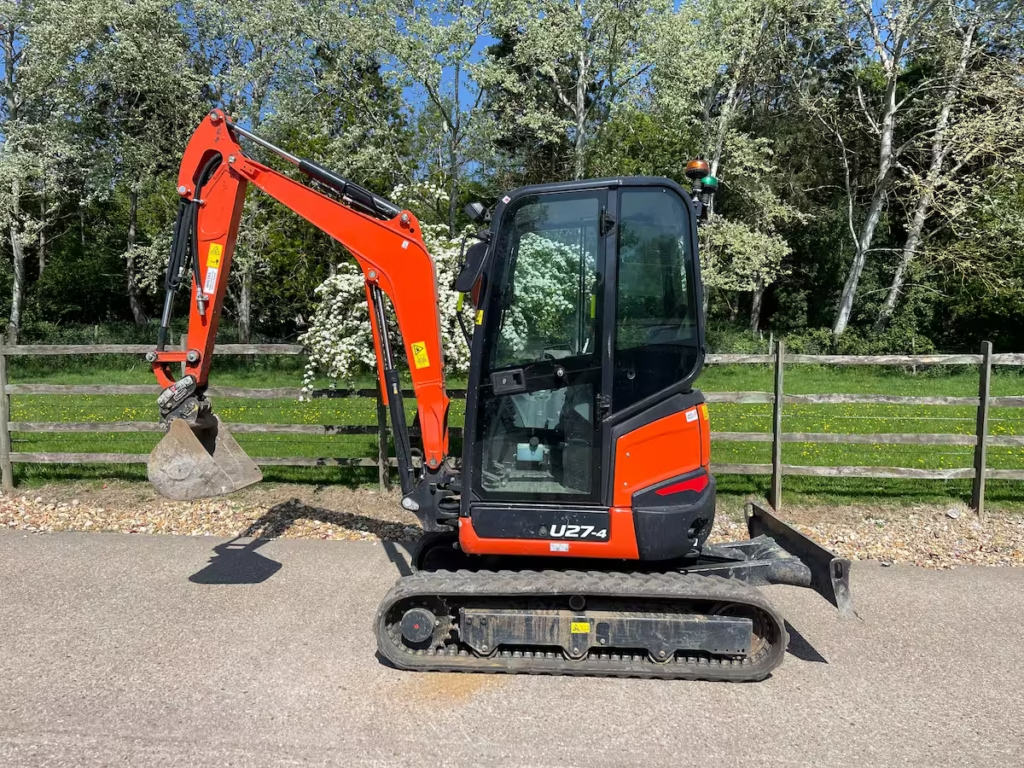
On this occasion, the seller had a well-maintained Kubota mini excavator and a heavy-duty plant trailer that were surplus to their needs. They wanted to release the capital tied up in the equipment without the uncertainty that usually comes with selling plant privately or through auction. What they were after was simple. A fair price, a quick sale, and none of the hassle.

Quick Facts

  • Equipment purchased: Kubota mini excavator and heavy-duty plant trailer
  • Condition: Well maintained
  • Purchase model: Outright cash purchase, no commission
  • Payment: Prompt
  • Collection: Arranged nationwide at a time to suit the seller
  • Process: No advertising, no auction, no tyre kickers

Why Selling Plant Privately Is Rarely Simple

Selling machinery on the open market tends to bring the same headaches. Auctions carry fees and leave the final price uncertain until the hammer falls. Private listings invite a stream of enquiries, tyre kickers and time-wasters, and viewings that eat into your working week. Neither route gives you certainty on price or timing, which is exactly what most sellers actually want.

Our seller wanted a single buyer who would assess the equipment quickly, make a firm offer, and handle the rest.

The Sale

We assessed the excavator and trailer, made a competitive outright offer with no commission, and arranged prompt payment. Collection was booked at a time that suited the seller, and we handled the transport ourselves. No advertising, no waiting on bids, no chasing buyers. Just a straightforward purchase with fast payment and a clean collection.

The Plant and Machinery We Buy

If it's surplus to your requirements, we'll assess it quickly and make a competitive offer. We regularly buy mini excavators, dumpers, telehandlers, forklifts, rollers and access equipment, along with plant trailers, agricultural machinery, attachments and buckets, and commercial vehicles.

Whether you're renewing your fleet, closing a depot, finishing a project, or releasing capital from underused assets, we purchase single items or entire fleets outright and arrange collection to suit you. No auction fees, no lengthy sales process, just a quick valuation and a straightforward purchase.

Have Plant or Machinery to Sell?

From a single mini digger to an entire fleet, we buy quality used plant and machinery throughout the UK and arrange collection at a time that suits you. Get in touch with us today for a quick valuation.

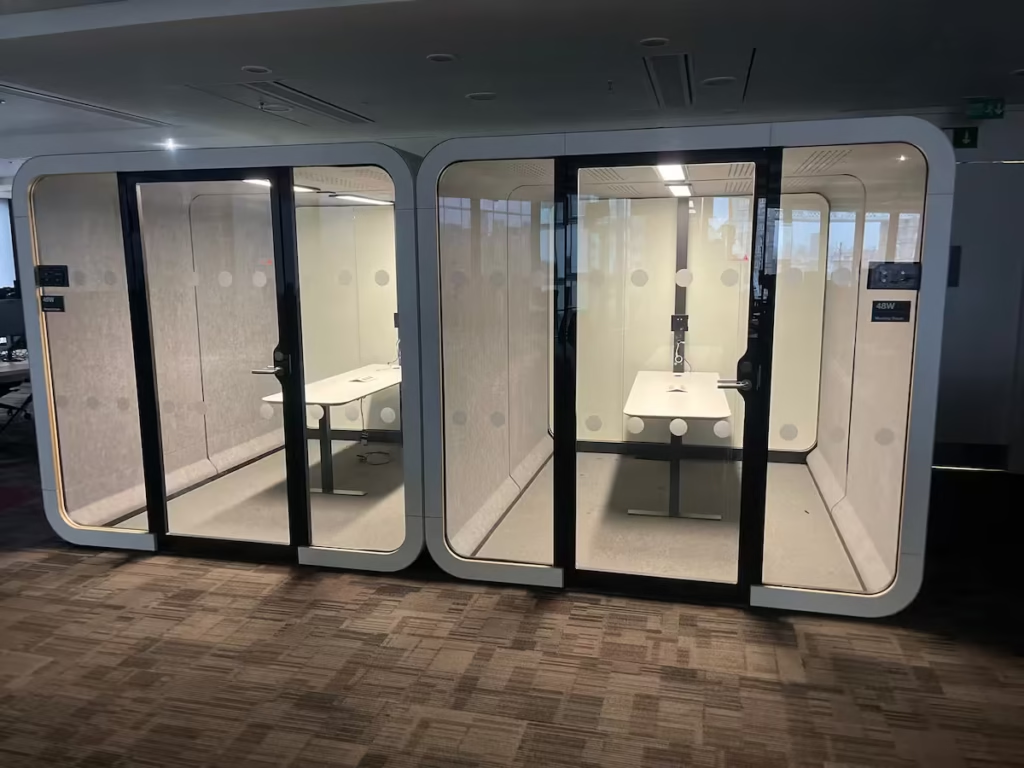
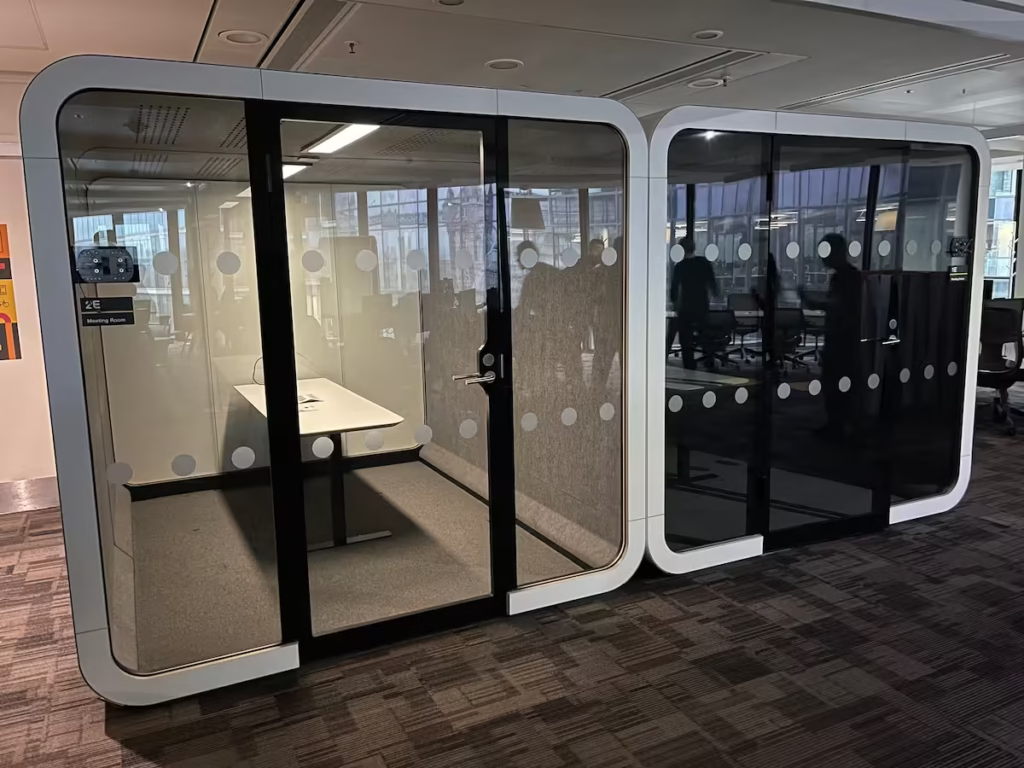
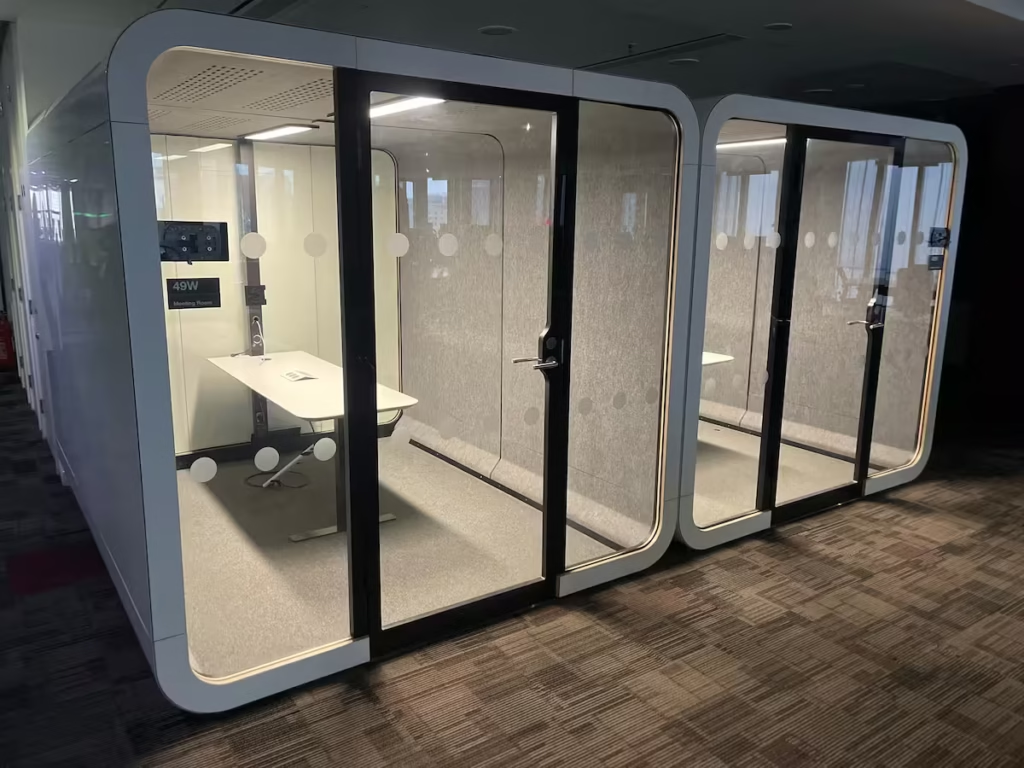
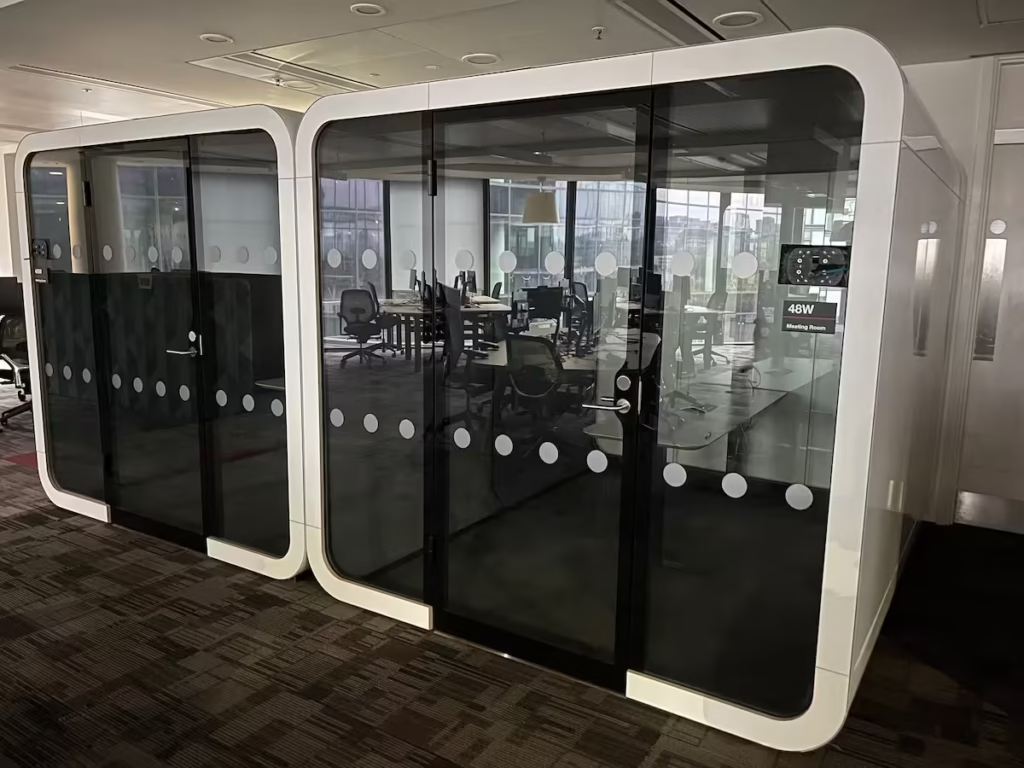
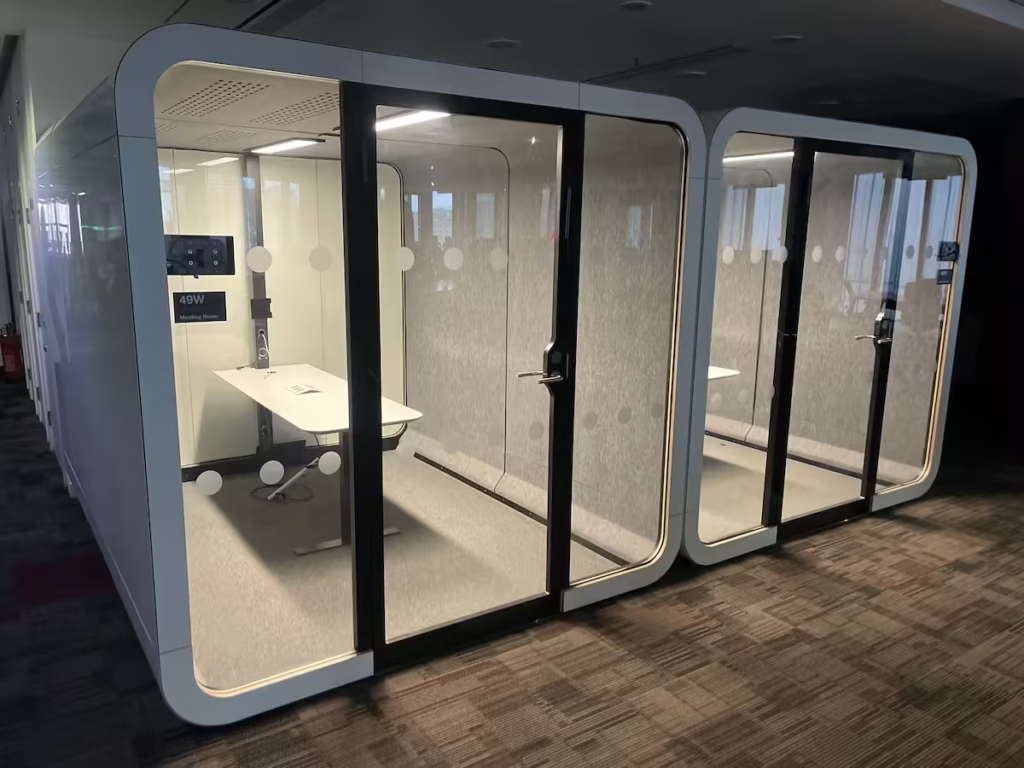
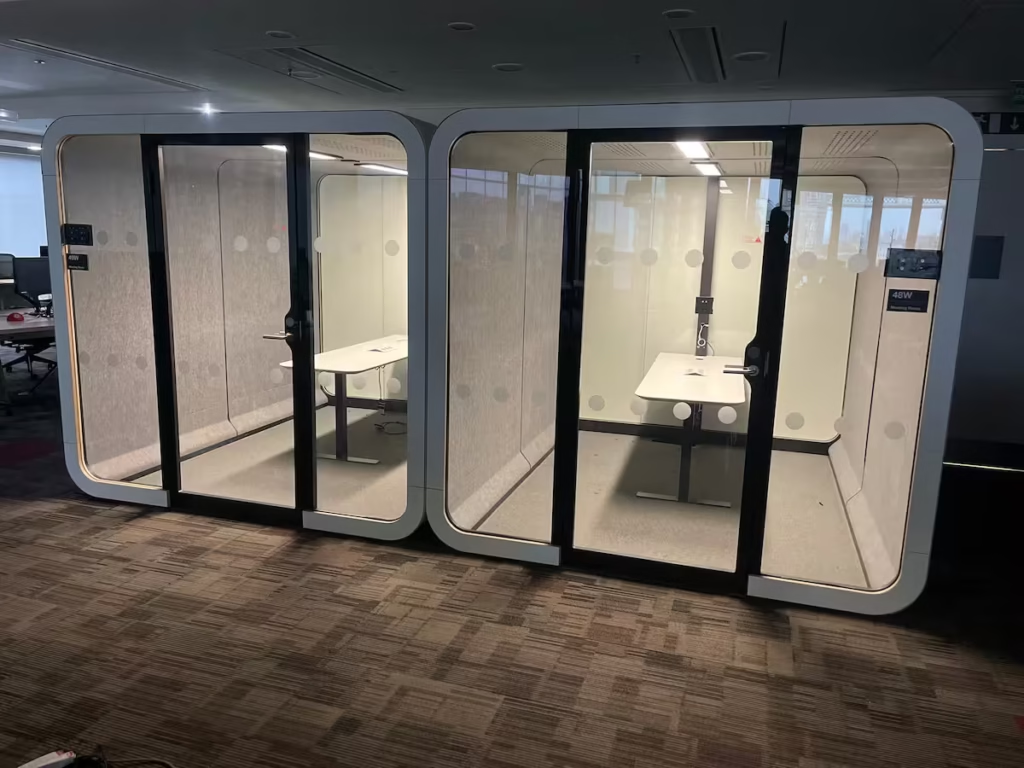
Four Framery Pods, One Saturday, No Disruption

Sometimes the hardest part of a project isn't the work itself. It's the window you have to do it in.

A corporate client needed four premium six-person acoustic meeting pods removed at short notice, and the timing left no room for manoeuvre. The removal couldn't touch weekday operations, and it couldn't slip, because the whole relocation programme was built around it. They needed a team that could mobilise fast, work to a tight deadline, and handle high-value acoustic pods without a scratch.

Quick Facts

  • Assets removed: 4 six-person acoustic Framery meeting pods
  • Team deployed: 10 specialist operatives
  • Timeframe: Single Saturday, arrival to departure
  • Weekday disruption: None
  • Handling: Specialist dismantling of glass panels and structural components
  • Site protection: Surrounding office areas protected throughout
  • Outcome: Client relocation programme kept on schedule

Why Office Pods Aren't a Standard Clearance

Large acoustic pods look deceptively simple. In practice they demand specialist knowledge, careful planning and the right lifting technique to come apart safely. Get it wrong and you risk cracked glass panels, damaged structural components, and a repair bill that dwarfs the cost of doing it properly in the first place.

These four pods each seated six people, with glazed panels and structural sections that had to be dismantled in the correct order and protected in transit. This was precision work against the clock, not a lift-and-shift.

The Plan

With only a small window available, we deployed a ten-person specialist team on a Saturday. Working over the weekend meant the client's office ran as normal through the week, with no impact on staff or operations. Our technicians dismantled each pod carefully, handling the glass panels and structural components with the attention they needed, and protected the surrounding office areas throughout so nothing else on site was affected.

Everything was decommissioned, dismantled, loaded and transported from site in the single day.

The Result

The client's relocation programme stayed exactly on track. The pods came out cleanly and safely, the office was untouched come Monday morning, and the whole job was completed in one Saturday from arrival to departure. A fast turnaround from instruction to completion, delivered without disruption to the business.

We Also Buy Office Pods and Workplace Assets

Alongside specialist removal, we also purchase high-value office assets outright where it makes sense. That includes Framery pods, acoustic meeting booths, phone booths, modular meeting rooms, and surplus office furniture and equipment. Buying outright lets businesses recover value while avoiding the delays that come with auctions or brokers.

Whether you're relocating, refurbishing or vacating an office, we can arrange rapid nationwide removal of office pods, meeting booths and other workplace assets, from a single Framery pod through to a complete office decommission.

Need Office Pods Removed Quickly?

Whether you're relocating, refurbishing or vacating an office, we can mobilise quickly to remove office pods, meeting booths and other workplace assets. Get in touch with us today to talk through your project.

650 Pallets: Warehouse Transition Case Study

When you're moving a warehouse operation, timing isn't just important. It's everything.

The goal was simple to state and difficult to deliver. Secure a new, larger warehouse to support growing stock volumes without a single day of disruption to operations. The problem was that both things had to happen at once. The old facility had to be fully decommissioned while the new one came online, with hundreds of pallets moving in between and every stage accounted for.

The complexity wasn't in the volume alone. It was in the coordination. This wasn't a one-off clearance. It was a business transition that had to flow as one continuous operation.

Quick Facts

  • Stock volume: 650 pallets
  • Articulated trailers: 25
  • Transport loads for racking: 2 dedicated vehicles
  • Transport loads for modular pods: 2 dedicated vehicles
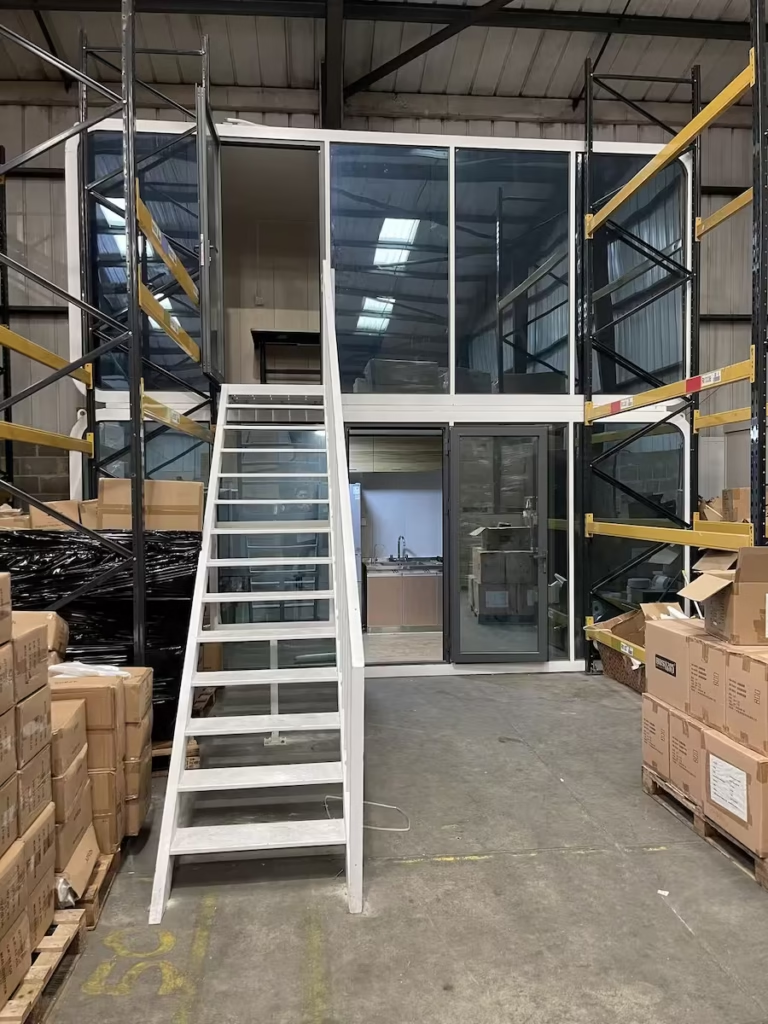
  • Modular office and welfare pods: 2, removed by specialist crane
  • Pallet racking: Complete Link51 system dismantled and removed
  • Operational disruption: Zero
  • Project outcome: Delivered safely and on programme

The Full Scope

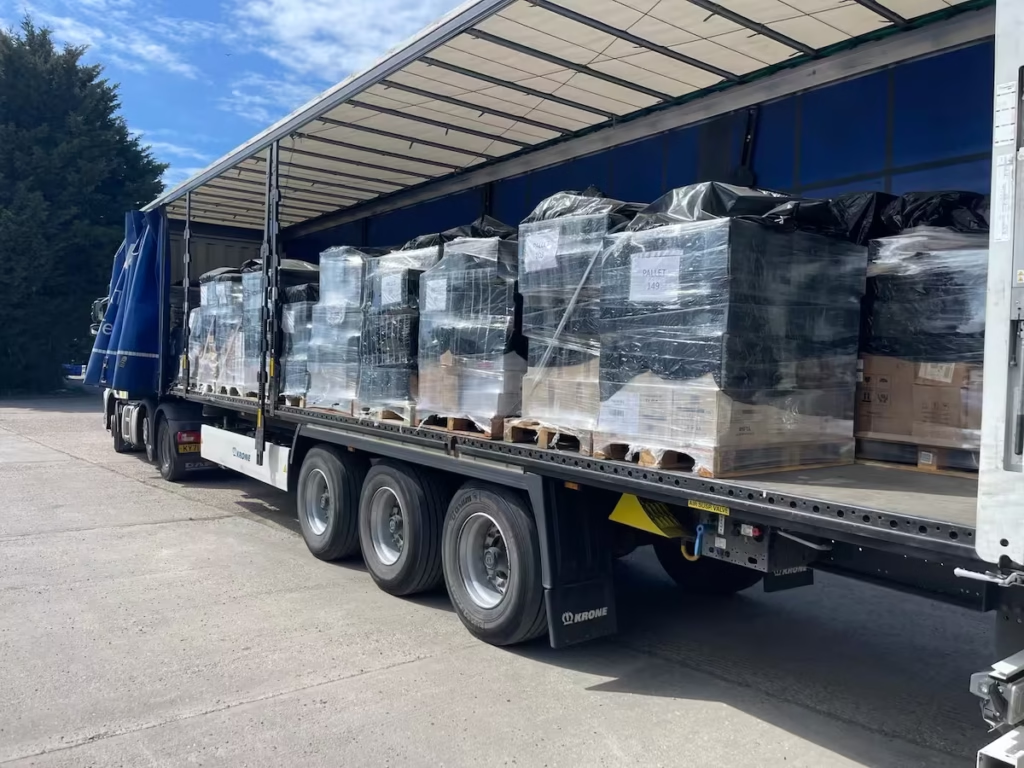
The project involved considerably more than moving stock from one building to another. We managed the complete decommissioning of a large distribution warehouse, which meant carefully loading and transporting 650 pallets of mixed inventory, dismantling and removing a Link51 pallet racking system, and taking out two glazed modular office and welfare pods using specialist crane equipment. In total we coordinated 25 articulated trailers, along with dedicated transport loads for the racking and the modular units, and arranged the specialist lifting operations that kept every phase on schedule.

Planning for Complexity

A warehouse move of this scale needs something a standard clearance never does: precise coordination across multiple contractors, lifting specialists, transport schedules and the client's own operational timeline, all running at the same time.

We started by mapping out every stage. Stock had to be loaded efficiently to fill trailers without wasted space. The racking had to be dismantled in a sequence that didn't block access to the pallets still being collected. The modular pods came out last, using a crane that could only be booked for a specific window. A delay in any one area would ripple through everything that followed it.

The Execution

Our team owned every stage of the operation from start to finish. We sequenced the loading so that 650 pallets moved across 25 articulated trailers with no waiting time between collections. The Link51 racking was professionally dismantled, labelled and packed for transport. Both modular office and welfare pods were carefully disconnected, safely craned from the building, and transported to their next destination.

What mattered most was that while all of this was happening, operations kept moving. By completing the works in parallel with the handover of the new warehouse, we made sure stock didn't sit waiting on a dock and nobody missed a beat moving into the expanded facility.

The Result

This is the kind of project that looks straightforward from the outside precisely because it ran so smoothly. That ease comes from planning weeks in advance, experienced teams who understand how to sequence complex logistics, and one point of contact owning the entire operation.

Another warehouse transition delivered safely and on programme, with the capacity the operation needed, the continuity it depended on, and zero disruption in between. That is the standard we hold ourselves to on every project, whatever its size.

Need to Move a Warehouse Operation?

If you're planning a warehouse transition and need coordinated logistics, specialist asset removal, or space cleared in your facility, get in touch with us today.

104 Pallets of Mixed Stock: From Warehouse Burden to Working Capital

The challenge with surplus inventory isn't just that it isn't selling. It's that while it's sitting in your warehouse, it's costing you money.

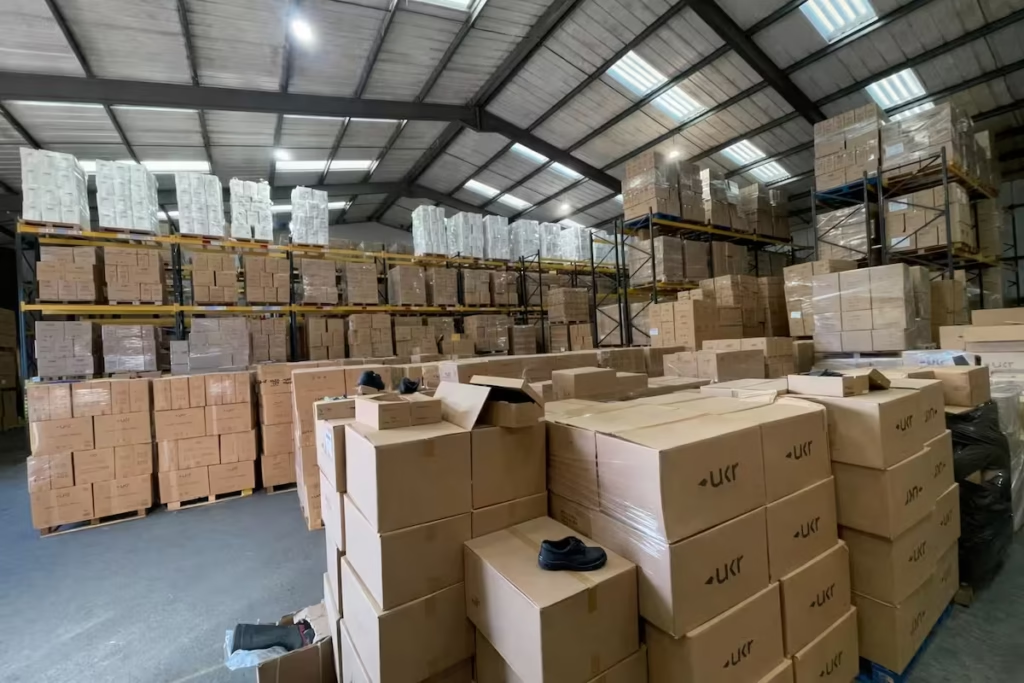
Our client had hundreds of different product lines that weren't moving. Some had been in the warehouse for months. The inventory was mixed across multiple categories, the velocity was low, and the holding costs kept climbing. They needed a buyer who could assess the entire lot at once, make a firm offer, and move it without delay. Most importantly, they needed certainty. Piecemeal disposal, auction waiting periods and broker chains weren't options.

Quick Facts

  • Pallets purchased: 104
  • Product categories: Hundreds of different lines
  • Purchase model: Outright cash purchase
  • Timeline: Valuation to collection within one week
  • Condition: Mixed consumable stock requiring grading
  • Next step: Sorted, graded and prepared for wholesale distribution

The Problem with Mixed Inventory

When your surplus stock spans dozens of product categories, the disposal route usually becomes complicated. Price each line individually and you're looking at weeks of work. Find separate buyers for different categories and you've multiplied the effort. Run an auction and you're waiting for bids to close, then waiting again for the buyer to collect on their schedule. Introduce a broker and you've added another layer of middlemen, each taking their cut, each extending the timeline.

What our client really needed was a single route to market. One buyer. One conversation. One collection date that would actually happen.

The Assessment

We visited the warehouse and assessed the full 104-pallet lot across all its different product lines. Rather than valuing each category separately, we looked at the entire consignment as a whole, factoring in volume, condition and the likelihood of sell-through across our network. We made a straightforward offer for the complete lot, with no hidden conditions and no waiting periods.

Our client had the certainty they wanted. They knew exactly how much they would recover, when the stock would leave, and when the warehouse space would be free.

One Week from Offer to Delivery

Once they accepted our offer, collection happened within a week. We arranged certified transport, coordinated the loading, and managed all the logistics so the client didn't have to arrange anything on their end. The 104 pallets arrived at our warehouse and were immediately sorted, graded and prepared for distribution through our wholesale network.

What looked simple on the surface actually required a full supply chain operation behind it. We didn't just move pallets. We verified condition on arrival, graded mixed inventory across dozens of product lines, and prepared everything for redistribution. That's the infrastructure that allows us to move quickly without cutting corners.

The Result

For the business, the outcome was immediate. Slow-moving inventory became working capital. Warehouse space was freed up for stock that actually turns. They stopped paying holding costs and could reinvest in better-performing lines. The entire process took a week from first contact to collection complete.

We do this regularly, working with lots that range from 10 pallets to 1,000. The principle stays the same. We have the buying power to make a fair offer, the warehouse capacity to absorb volume, and the logistics network to move stock efficiently. Our clients focus on running their business while we unlock value from inventory that isn't earning them anything.

Have Surplus Stock You Need to Move?

Whether you're holding slow-moving inventory, clearing warehouse space, or dealing with overstock from returns, we'll assess your stock and make a competitive offer. Contact us today for a free valuation.

Used Packaging Machinery: Sourcing Second-Hand Equipment for Warehouses and Fulfilment

Running a warehouse or fulfilment operation means making procurement decisions with one eye on cash flow and the other on operational continuity. When packaging line capacity needs to go up, new machinery is rarely the only option, and for many operations it is not the most practical one either. A well-sourced used machine can do the same job at a fraction of the cost, often available immediately rather than after a 20 to 30 week manufacturer lead time.

This guide covers what the UK surplus market looks like for packaging machinery, which machine types you are most likely to find, and what to check before committing to a purchase.

Why Operational Buyers Are Turning to Surplus Machinery

The cost case is straightforward. Used packaging machinery typically sells for 30 to 70% less than a comparable new unit, depending on age, condition, and model. For equipment that performs a simple, repeatable task, such as wrapping pallets or sealing cases, the performance difference between a well-maintained used machine and a brand-new one is often marginal. The price difference is not.

There is also the question of timing. New packaging machinery in the UK carries a typical contract-to-delivery lead time of 20 to 30 weeks according to PPMA guidance, before installation and commissioning. For an operation that needs additional capacity before peak season, or a second site that needs to be operational in weeks rather than months, that timeline is not workable. Surplus equipment can often be collected or delivered immediately.

The practical use cases are specific. A growing fulfilment operation adding a second pallet wrapper to handle peak despatch volumes. A business equipping a new overflow site without committing full capex to brand-new kit. A warehouse replacing a failed machine quickly without waiting on an OEM order. In each case, a used machine from a clearance or surplus source fills the gap without a lengthy procurement cycle.

There is also a tax consideration worth knowing. The Annual Investment Allowance (AIA) currently stands at £1 million per accounting period and applies to both new and second-hand plant and machinery. Full Expensing, by contrast, covers only new purchases. For most warehouse operations, this means you can still claim 100% tax relief in the year of purchase on a used machine, the same as you would on new equipment under AIA.

The Machine Types Most Commonly Available as Surplus

Not all packaging machinery turns up in surplus lots with equal frequency. The types that appear most regularly reflect the broader operational footprint of UK warehouses and fulfilment operations: end-of-line equipment that every packing operation needs, rather than highly specialised filling or form-fill-seal machinery.

Stretch wrap and pallet wrappers are the most commonly available surplus machine type. Every warehouse that ships palletised goods has at least one, and when businesses downsize, relocate, or close a site, they dispose of these first. Brands including Robopac, Lantech, and Jungheinrich appear regularly in the UK market, with prices for used units typically ranging from a few hundred pounds for older semi-automatic models to several thousand for more recent turntable wrappers.

Strapping machines are another frequent surplus item. Semi-automatic and automatic arch strapping machines from brands such as Mosca are common in UK surplus channels. These typically run on three-phase power, which is worth confirming before purchase (more on power specifications below).

Case sealers and tape machines range from simple manual tape dispensers to fully automatic random-size case sealers. Brands such as Siat, 3M-Matic, and Loveshaw are well-represented in the UK used market, and parts for common models are generally still available through UK distributors. Void fill machines, including air cushion systems and paper void fill equipment, also appear regularly in surplus lots. Conveyor sections, both belt and roller, turn up frequently when operations are reconfigured or closed down, and a short section of conveyor can often solve a line-flow problem cheaply and quickly.

Labelling equipment is less commonly available in general surplus lots. It tends to come through specialist pharmaceutical and FMCG machinery dealers rather than general clearance channels.

Availability in any surplus channel varies by lot and by timing. The right approach is to check current stock regularly rather than assuming a specific machine type will always be available.

What to Check Before You Buy

Buying used machinery from a surplus or clearance source carries a different risk profile to buying from a specialist dealer who has refurbished the equipment. Understanding what to look for, and what to ask, goes a long way towards avoiding a poor purchase.

Condition grading is the first thing to assess. The used machinery market does not have a universal grading standard. Terms like "good used", "ready for operation", and "working order" mean different things to different sellers. A seller who grades specifically and explains what each grade covers is more trustworthy than one using vague general terms. At a minimum, ask what is meant by the stated condition, whether the machine was last in use and when it was decommissioned, and whether any known faults or repairs have been carried out.

Age and hours matter in the same way mileage matters when buying a second-hand vehicle. Ask for the year of manufacture and, where the machine records it, the number of operating hours or cycles. A machine with a high cycle count is not necessarily a bad buy, but you should factor wear on components such as belts, seals, strapping heads, and bearings into your assessment. Ask the seller for any available maintenance records. A machine with documented service history carries significantly less uncertainty than one without.

Parts availability is one of the most common traps in used machinery purchases. An inexpensive machine becomes an expensive problem if it fails and replacement parts are no longer available. Before committing to a purchase, confirm whether the manufacturer is still in business, whether consumable parts for that model are currently stocked by UK distributors, and whether local engineers familiar with the brand are available for servicing. For common brands in the warehouse machinery space, this is usually manageable. For obscure or discontinued models, it is a risk worth pricing in.

Voltage and power specification is a practical buying blocker that is easy to overlook. UK mains supply runs at 230V single-phase and 400 to 415V three-phase. Lighter packaging equipment, including most case sealers and bench-top labellers, typically runs on single-phase and will plug into a standard industrial socket. Heavier equipment, including most strapping machines, large pallet wrappers, and conveyor systems, typically requires a three-phase supply. If your site does not have a three-phase supply installed, retrofitting one can carry significant additional cost depending on the distance from the supply point. Always confirm the machine's voltage and phase requirements before purchase and check your site's electrical supply against that specification.

A test run before purchase is the clearest indicator of condition. The PPMA's guidance for used equipment buyers states that any used machine should be available for inspection and testing as a minimum standard. If a seller is unable or unwilling to demonstrate a machine running under load, treat that as a risk signal. Even a short test cycle will reveal obvious mechanical issues, unusual noise, vibration, or inconsistent performance that photographs and descriptions cannot.

How Surplus Machinery Fits a Fulfilment Workflow

Surplus machinery works best as a deliberate procurement decision rather than a last resort. The clearest fit is in scenarios where operational need is time-sensitive, where the machine will perform a defined, repeatable task, and where new-equipment lead times or pricing make a new purchase impractical.

Adding a second pallet wrapper before peak despatch season is a common example. Rather than committing to a new machine at full price, a used unit in good condition covers the capacity requirement at lower upfront cost. If it performs well, it earns its place on the floor permanently. If volume reduces after peak, you have not over-capitalised on equipment that sits idle for six months of the year.

Equipping a new site quickly is another strong fit. A second fulfilment site needs end-of-line packaging capability from day one, but committing to a full new-equipment package while the operation is still establishing itself carries unnecessary financial risk. Used equipment from surplus sources can get the line running at a fraction of the cost, with any upgrades to new kit deferred until the site's volume and requirements are better understood.

One practical point worth noting: used machinery from clearance sources may come without full technical documentation. Factor in time for a basic commissioning check when planning the acquisition. For more complex equipment, a brief inspection by a service engineer familiar with the brand can identify any remedial work needed before the machine goes into production use.

To browse current surplus packaging machinery and equipment available from Enviro Stock, visit the packaging category (https://enviro-stock.co.uk/product-category/packaging/). Stock changes regularly, so it is worth checking back if a specific machine type is not currently listed.

Questions Worth Asking Any Surplus Seller

Before purchasing used packaging machinery from any surplus or clearance source, a short set of questions will help you assess the risk level of the purchase and compare options more clearly.

Start with the basics. What is the year of manufacture? Has the machine been tested, and if so, when and by whom? What voltage and phase does it require? Are there any known faults, previous repairs, or components that have been replaced? Is any documentation available, including operator manuals, service records, or a machine specification sheet?

Then move to the transaction itself. Can you inspect the machine in person before purchase? Can the seller demonstrate it running under load? What are the collection or delivery arrangements, and who is responsible for loading? Is the sale with any form of warranty or return option, or is it sold as-is?

A well-run surplus operation should be able to answer the practical questions clearly. If a seller cannot provide basic information about the machine's age, voltage spec, or condition, or is reluctant to allow inspection, that is a reason to look elsewhere. The answers do not need to be perfect, a machine with a repair history is not automatically a bad buy, but they should be clear and honest.

Finding Used Packaging Machinery in the UK

The UK market for used packaging machinery operates through several distinct channels, each with a different risk and price profile.

Specialist refurbishment dealers, such as Key Packaging, Technosys PES, and SC Packaging Technology, source used machines, carry out refurbishment work, and sell with some form of warranty or return option. This route offers the highest confidence but comes at a higher price point. Refurbished machines from specialist dealers typically reflect the cost of the refurbishment work in the asking price.

Online machinery marketplaces, including Machineseeker and Agriaffaires, list equipment from dealers and private sellers across the UK and Europe. These platforms aggregate volume but vary significantly in seller quality. Listings are not curated, and machines are sold as described, with no independent condition check. They are a useful tool for market pricing and identifying availability, but buyers should apply the same due diligence checks as with any used purchase.

Surplus and clearance routes, where equipment comes from business disposals rather than specialist dealers, typically offer the lowest prices. The trade-off is less curation and less certainty about condition. The value in this route lies in finding equipment that a structured clearance operation has assessed and can describe accurately, rather than buying blind from a liquidation lot with no information about the machine's history.

For any purchase through a surplus channel, the due diligence steps covered above, covering condition, voltage, parts, and a test run, apply regardless of who the seller is.

A Note for Businesses Selling Surplus Machinery

If you have packaging machinery or industrial equipment you need to clear, Enviro Clear buys surplus assets including packaging machinery from businesses across the UK. You can find out more and get in touch at enviro-clear.co.uk.

Bulk Buying for Resale in the UK: How to Source Stock That Actually Sells

Bulk buying for resale in the UK is not complicated. It is, however, easy to get wrong. The gap between a profitable sourcing run and a costly mistake usually comes down to a few decisions made before you commit to anything. This guide covers what those decisions are, what to look for in a lot, and what you can realistically expect to make.

A lot of content on this topic is written from a US perspective. The terminology, the sourcing platforms, and the margin benchmarks are all different here. What follows is grounded in how the UK clearance and surplus market actually works.

What "Bulk Buying for Resale" Actually Means in the UK

There are two distinct routes, and confusing them is one of the most common early mistakes. Standard wholesale means opening a trade account with a supplier, meeting a minimum order value, and buying branded or own-label goods at a trade price to sell on at a margin. That is not what most resellers who source from clearance and surplus platforms are doing. They are buying liquidated, returned, or end-of-line stock at below-wholesale prices because the original seller needs to move it quickly.

The two routes are not interchangeable. Standard wholesale gives you predictable, repeatable stock at consistent quality. Clearance and surplus sourcing gives you access to deeper discounts, but with more variability in condition and no guarantee of repeatability. Both can work. The choice depends on your channel, your storage situation, and how much assessment work you are willing to do before stock arrives.

In the UK, the clearance and surplus market is well-established. Domestic suppliers hold UK-sourced stock, provide manifests, and operate under UK trading standards. That is a different position from the US liquidation model, which relies heavily on B2B auction platforms and involves customs and import calculations when buying from overseas. Sourcing UK stock from a UK supplier removes those layers entirely.

The Main Stock Types Worth Knowing About

Returns pallets are bulk collections of customer-returned goods from retailers and e-commerce platforms. Condition varies widely within a single pallet, from unopened items in original packaging through to products with missing accessories or cosmetic damage. Returns are the most widely discussed stock type in the resale community because they are accessible, the volumes are large, and the discount from retail can be significant. They require more assessment work upfront than other stock types, particularly for electronics.

Clearance lots are end-of-line or overstock goods that a manufacturer or retailer needs to move to free up warehouse space. This is not customer-returned stock. It is typically in original packaging and has never been sold. Condition is more predictable than returns, and manifests are usually more straightforward. If you are newer to bulk sourcing, clearance lots are often the lower-risk starting point.

Surplus lines are overproduced stock that never reached the shelf. This can come from seasonal overproduction, a discontinued product range, or a cancelled retail order. Condition is reliable, documentation tends to be clean, and the stock usually carries original packaging. Surplus lines are common in food and drink, packaging, janitorial supplies, and office consumables, which makes them relevant for B2B operational buyers as well as resellers.

Job lots are mixed or single-category lots assembled from various sources. The entry cost is low and the category mix can be broad, which is why they tend to attract car boot sellers and market traders. A well-documented job lot with clear condition notes can be good value. An undocumented one is a risk that experienced resellers learn to price into their offers.

Worth noting on vocabulary: the language around clearance stock is not consistent, and different terms attract different buyer types. "Liquidation pallets" tends to skew towards marketplace resellers. "Surplus" and "overstock" are more common in B2B operational sourcing. "Job lots" skews towards market traders and car boot sellers. When searching for stock, it is worth casting a wide net rather than sticking to one term.

What to Check Before You Commit

The manifest is the most important document in any clearance stock purchase. It is a spreadsheet or PDF listing the contents of a lot line by line, with item descriptions, quantities, condition notes, and sometimes the manufacturer's suggested retail price for each item. A good manifest tells you what you are buying before you buy it, which lets you estimate realistic resale values, spot categories that will not work for your channel, and flag items where the condition grading needs clarification.

If a supplier will not provide a manifest, or offers only a vague description of contents, walk away. Reputable UK clearance suppliers provide manifests as standard. The absence of one is not a sign of a bargain waiting to be unlocked. It usually means the supplier either does not know what is in the lot or does not want you to know before you commit.

Condition grades are the shorthand a supplier uses to describe the state of individual items. Grade A typically means brand new or nearly new, in original packaging, with no visible damage. Grade B means used or with minor cosmetic damage, still fully functional, and typically priced at 20 to 50% below the equivalent new price. Grade C covers refurbished, damaged, or incomplete items. "Untested" is a separate designation, most common in electronics, meaning individual items have not been checked for functionality. On a platform like eBay where buyer protection is strong, untested stock carries real risk: a buyer who receives a non-functioning item can open a return, and your platform standing takes the hit alongside your margin.

Factor in logistics before you agree on a price, not after. A full pallet delivered to your door costs money, and that cost varies depending on the supplier, the destination, and the pallet's dimensions and weight. Some UK clearance suppliers can arrange direct delivery. Others expect collection from their warehouse. Know which applies and model the delivery cost into your numbers before the lot looks profitable on paper.

Where UK Buyers Go Wrong

Buying without a manifest is the most avoidable mistake and also surprisingly common. Newer resellers are often attracted by a low lot price and assume the contents will be worth more than they paid. Sometimes they are. More often, the lack of documentation reflects stock that the supplier cannot or will not describe in detail. That is not a comfortable place to be when you open the boxes.

Category mismatch causes consistent losses that often go undiagnosed. Untested electronics are a poor fit for eBay, where buyer protection is robust and a return from a buyer claiming an item is not as described can be hard to contest. Clothing job lots with no size breakdown are a poor fit for Amazon, where size-specific listings and high apparel return rates erode margin quickly. The principle is straightforward: understand the return and dispute environment on the platform you are selling on before you commit to a lot type that exposes you to it.

The margin calculation most resellers run looks like this: lot cost divided by number of items gives cost per unit; sell each item for twice that; profit. The actual calculation includes platform fees, which run to 9.9 to 14.9% on eBay for business sellers and 8 to 15% referral fees on Amazon, on top of subscription costs. Add postage, packaging, storage, returns, and unsellable items in the lot. The sell-through rate on a mixed lot is rarely 100%. A lot that looks fine on a simple division can look very different once all costs are in.

A related problem is chasing the cheapest lot price without thinking about sell-through. A lot priced at 20p per unit sounds better than one at 50p, right up until the cheaper lot contains a category mix that takes six months to clear, or items your buyer base simply is not interested in. Price per unit matters. So does how quickly and reliably those units will actually sell.

What Margins Are Actually Realistic

Most content on this topic overstates what is achievable. Claims of guaranteed 3x or 5x returns on clearance pallets are marketing. The actual range of outcomes is wide and depends on category, grading, channel, and how much of the lot you can sell through at a workable price.

Experienced resellers who buy consistently in categories they know well, on platforms they understand, through suppliers they have built a relationship with, can achieve solid and repeatable margins. Repeatability is the measure that matters. A one-off lucky buy on an unmanifested lot is not a business model. A consistent sourcing relationship with a supplier who provides accurate manifests and reliable grading is.

Work backwards from the margin you need. Take the platform fees for your channel, add postage and packaging, estimate a realistic sell-through rate and an average return rate, and work out what you can afford to pay per unit while still hitting your target. That number, not the headline lot price, is what tells you whether a deal makes sense.

Clearance and surplus sourcing can generate strong margins for buyers who do the work upfront. It can also generate losses for buyers who treat it as a shortcut. The difference usually comes down to the quality of information you have before you commit, and how accurately you model the full cost of selling rather than just the cost of buying.

Why UK-Sourced Stock Has a Practical Advantage

Buying from a UK supplier removes the import layer entirely. No customs declarations, no duty calculations, no landed cost to work out before you know whether a lot is profitable. For resellers starting out, this simplicity has real value. For more experienced buyers working at volume, it means faster decisions and more predictable logistics costs.

UK supplier accountability is a practical consideration too. If a lot arrives significantly different from what the manifest described, you have a clear route to dispute resolution under UK trading standards. That is harder to enforce with overseas suppliers, particularly on platforms where disputes are handled under different consumer protection frameworks.

UK grading standards and terminology are not perfectly uniform across every supplier, but they are familiar enough to navigate once you have dealt with a few. The US liquidation market uses similar grade labels, but the underlying condition standards and the level of detail in a typical manifest can differ meaningfully. Sourcing from UK suppliers means operating in a market you understand, with recourse you can actually use.

At Enviro Stock, we hold UK-sourced clearance and surplus lots with manifests and condition grading as standard. If you want to see what is currently available, browse our current stock here enviro-stock.co.uk.

Frequently Asked Questions

Do You Need to Be VAT-Registered to Buy Bulk Stock for Resale in the UK?

No. You do not need to be VAT-registered to buy clearance or surplus stock for resale. You do need to register with HMRC if your earnings from resale exceed £1,000 in a tax year, which means registering for Self Assessment as a sole trader or setting up a limited company. VAT registration only becomes compulsory once your annual taxable turnover exceeds £90,000. For most resellers starting out, standard HMRC self-employment registration is all that is required. The Xero guide to registering as a sole trader covers the process clearly.

What Is the Difference Between a Returns Pallet and a Clearance Lot?

A returns pallet contains customer-returned goods from a retailer or e-commerce platform. Condition varies: some items will be unopened, others will show signs of use or be missing accessories. A clearance lot contains stock that has never been sold to a customer. It is typically end-of-line, overstock, or surplus from a manufacturer or retailer, and is usually in original packaging. Clearance lots tend to have more predictable condition and are often easier to assess from a manifest alone.

How Do I Know If a Bulk Lot Is Worth Buying?

Start with the manifest. Check that the item descriptions are specific enough to verify resale values. Look up recently sold prices on the platform you intend to sell on, apply your platform fees, postage, and a realistic sell-through rate, and see whether the numbers still work after all costs. If the supplier cannot provide a manifest, or the manifest is too vague to verify, pass on it.

What Are the Risks of Buying Untested Stock?

Untested stock means individual items have not been checked for functionality before the lot was assembled. For electronics, that creates real risk: a buyer who receives a non-working item can raise a return or dispute, particularly on platforms like eBay where buyer protection is strong. Untested stock is not automatically bad value, but it needs to be priced to reflect the unknown defect rate. If you are new to bulk sourcing, graded stock with a manifest is the lower-risk starting point. Untested lots suit buyers who have the ability to test and refurbish items, or who are selling in environments where the buyer accepts the condition upfront.

If you have surplus or excess stock you are looking to move, Enviro Clear buys stock across most categories.
What Is Deadstock? Why Unsold Inventory Gets Sold On

What Deadstock Actually Means

Deadstock is inventory a retailer or manufacturer couldn't sell. It sits in storage until the business decides clearing it out is better than continuing to carry it. The term covers end-of-line products a brand has discontinued, seasonal ranges that didn't sell through, and overordered goods that exceeded actual demand.

One thing worth clarifying upfront: in streetwear and sneaker culture, "deadstock" means something different: items that are brand new, unworn, and in original packaging, often sought after because they've never been sold. This article uses the word in the clearance market sense throughout.

Where Deadstock Comes From

The clearest source is seasonal over-ordering. Fashion retailers buy stock months ahead, and even experienced buyers get it wrong. A warm autumn eats into knitwear sales. A trend reverses mid-season. A range that tested well in one region underperforms in another. The result is finished goods, in original packaging, that need to move.

Manufacturers run into the same thing. Minimum order quantities push producers to make more than any single customer needs, and the surplus from those runs needs a route to market. End-of-line decisions work the same way: when a retailer discontinues a product, the remaining stock is surplus regardless of how well it sold before.

UK retail insolvency adds to this at a consistent rate. Wholesale and retail trade accounted for 3,768 company insolvencies in England and Wales in the 12 months to October 2025, according to the Insolvency Service, making it the second-largest insolvency sector after construction. When a business enters administration, its unsold inventory has to move quickly, usually in bulk. Some of that stock is current-range goods still priced at RRP elsewhere.

Why Deadstock Ends Up on the Clearance Market

Holding unsold stock costs money. Carrying costs (warehousing, insurance, capital tied up in goods that aren't moving) typically reach 20 to 30% of inventory value per year, according to industry benchmarks. A pallet that hasn't shifted in six months is costing the business that holds it.

The clearance route closes that out. A sale to a clearance buyer recovers some capital, frees storage space, and draws a line under the stock. That's why you find branded goods, intact lot quantities, and current-range packaging on the clearance market. Nothing is wrong with the goods. They just stopped making sense to sit on.

There's a sustainability angle here too. The British Fashion Council's Solving Fashion's Product Returns report found 23 million returned and unsold garments were sent to landfill or incineration in the UK in 2022. Deadstock entering the clearance market is at least stock that's getting used.

What Condition Is Deadstock In?

Deadstock hasn't been used. It's not returns. Nobody bought it, opened it, or sent it back. That makes a real difference to condition. With a returns pallet, you're dealing with a wide grade spread in a single lot. With deadstock, you're not.

It generally comes in original or near-original packaging. Outer packaging can have some cosmetic wear from time on a shopfloor or in a warehouse. The product inside is typically new. That reliability costs something: per-unit pricing on deadstock sits above liquidation returns pallets because the condition is more predictable.

Due diligence still applies. Ask for a manifest (product lines, quantities, SKUs) before you commit. If grading labels are used, ask what they actually mean for that supplier. Grade B means different things in different systems. A supplier who can tell you where the stock came from, whether retailer overstock, manufacturer surplus, or end-of-line disposal, gives you something to assess. One who just says "clearance" doesn't.

Is Deadstock Worth Buying?

For marketplace resellers, often yes. Consistent condition and original packaging mean less sorting on arrival. If you're selling on eBay, Amazon, or Vinted, knowing what you're getting before the pallet arrives makes stock planning more straightforward. Independent retailers tend to find it useful for the same reason: you're buying new goods that couldn't move through normal channels, not goods that have been through the returns process.

For B2B operational buyers, those buying surplus packaging, janitorial supplies, or office materials for internal use rather than resale, the condition predictability tends to matter more than the per-unit price. Being able to request a manifest and confirm delivery before committing is usually more useful than a sharper discount on a lot you can't assess properly.

At EnviroStock, listings include grading information as standard, and delivery is available so you don't need to arrange your own transport. Browse current stock to see what's listed, or get in touch if you're looking for a specific category or lot size. If you have surplus or clearance stock to move, we buy stock as well. Reach us via our contact page.

What Is Liquidation Stock? How UK Clearance Stock Enters the Market

What Is Liquidation Stock?

Liquidation stock is goods sold in bulk to recover capital, usually under time pressure. The seller, whether a retailer, manufacturer, or insolvency practitioner, needs to convert inventory into cash, and the clearance market is the route. Buyers get stock at a discount; sellers recover some capital and free up storage.

The term gets stretched. In the UK clearance market, "liquidation stock" covers goods from different sources, in different conditions, assembled under different circumstances. Where a specific lot came from tells you far more than the label does.

Where UK Liquidation Stock Comes From

Consumer returns are one of the largest single sources. Research by Whistl puts the cost of returns to UK retailers at around £60 billion per year, with roughly one in three online purchases coming back. Once returned stock arrives back at a retailer's warehouse, it's sorted and graded. Anything that can't go back on shelf at full or reduced price moves into the clearance supply chain.

Retail insolvency adds to this consistently. Wholesale and retail trade was the second-largest insolvency sector in England and Wales in the 12 months to February 2025, accounting for 3,607 cases according to the Insolvency Service. When a retailer enters administration, its remaining stock, sometimes current-range goods still priced at RRP elsewhere, needs to be sold quickly. That stock reaches clearance buyers in bulk, often with less documentation than you'd get from a planned disposal.

Overstock and end-of-line decisions create a third stream. Retailers and manufacturers carry more stock than normal channels absorb. A range change, a season that underperformed, a promotional push that didn't land. The resulting excess needs to move. The goods are often new, in original packaging. The business just can't carry them.

Manufacturer surplus contributes too. Minimum order quantities mean production often runs ahead of actual demand, and the overage has to go somewhere.

What Liquidation Stock Looks Like in Practice

Condition within a liquidation lot is more variable than in surplus or clearance stock. A single pallet can hold Grade A goods in original packaging alongside Grade C items with visible cosmetic damage or missing accessories. That's not a supplier failing. It reflects the reality of how this stock is assembled and moved.

Some liquidation lots come from a single source: one retailer's returns from one season, sorted and graded before sale. Others are aggregated across multiple origins, which widens the condition spread and makes documentation harder to verify. Knowing which type you're dealing with matters.

Pricing reflects this. Liquidation stock costs less per unit than surplus or structured clearance because buyers are compensating for the condition spread and the assessment work involved. A well-documented lot from a named single source is a meaningfully different proposition from an undocumented mixed-origin pallet, and the pricing should reflect that difference.

How to Assess a Lot Before You Buy

Start with the manifest. A line-level manifest lists individual SKUs with condition grades, quantities, and sometimes the original retail price. It gives you the information you need to judge what's in the lot and what a realistic sell-through looks like. A manifest listing only broad categories tells you much less. No manifest at all is a serious gap for liquidation stock specifically: condition variance without documentation means you're taking on risk you can't price accurately.

Grading definitions vary between suppliers. Grade A through D labels are widely used, but Grade B in one system isn't necessarily Grade B in another. Ask specifically: does Grade B mean "opened but unused" or "opened and tested"? The distinction affects what you can plan for on resale.

Ask about provenance. "Retail returns" can mean returns from a single large retailer, a mix from multiple sources, or stock that's passed through a processor. Each carries different implications for condition consistency and paperwork. A supplier who can tell you where the stock came from is giving you more to work with.

Confirm delivery terms early. Whether the supplier delivers to you or expects you to arrange collection affects your landed cost, and it's easy to overlook until it becomes a problem.

What UK Buyers Should Know

Most content about liquidation stock online comes from US sources. The US market runs on different supply chain structures, uses different platform models (B-Stock, Direct Liquidation, and similar auction-based services), and operates under different legal frameworks for consumer returns and insolvency. Advice written for that market doesn't always translate.

In the UK, consumer returns are shaped by the Consumer Rights Act. UK insolvency follows the Insolvency Act 1986, which means administration runs on specific timelines that influence how quickly stock needs to move and in what lot sizes it typically comes to market.

UK clearance suppliers grading and manifesting stock to line-level are generally operating to a higher standard than the "manifest optional" norm still found in parts of the US-influenced market. If you've been reading US-sourced liquidation content, some of the due diligence advice may underestimate what you can reasonably expect from a structured UK supplier.

Buying Liquidation Stock Through Enviro Stock

At EnviroStock, all listings include grading information and delivery is available, so you don't need to arrange your own transport. Browse current stock to see what's listed, or get in touch to discuss a specific lot or category. If you have surplus or clearance stock to move, we buy stock as well. Reach us via our contact page.

Surplus vs Clearance vs Liquidation: What the Difference Means When You're Buying Stock

Why the Terminology Matters

Sellers use surplus, clearance, and liquidation as if they mean the same thing. Sometimes that's deliberate. A returns pallet dressed up as "surplus" commands a better price. Often it's just careless. Either way, the differences affect condition, what documentation you should expect, and how much checking you need to do before committing.

What Is Surplus Stock?

Surplus stock is goods made or ordered in larger quantities than the market needed. Nobody returned it, damaged it, or opened it. It's available because someone miscalculated demand: they over-ordered ahead of a range change, misjudged a season, or found themselves sitting on inventory after a product was discontinued.

Condition is reliable. You're buying new goods at a discount, not goods that have anything wrong with them. That reliability costs something: surplus lots sit above clearance and liquidation on price per unit. A manifest showing product lines, quantities, and SKUs is standard practice. If one isn't provided, ask.

What Is Clearance Stock?

Clearance covers end-of-line goods, seasonal ranges being rotated out, and discontinued products that retailers need off the shelf to make room for new inventory. Usually unused, but it may have spent time on a shopfloor or in a stockroom, so some cosmetic wear on outer packaging is possible.

The trigger is planned, not urgent. A fashion brand clearing last season's range, a supermarket cycling out a discontinued SKU. The retailer wants space and some capital back. Pricing sits below RRP by a meaningful margin, though exactly how much depends on how quickly they need to move. A category breakdown or basic manifest is a reasonable expectation.

What Is Liquidation Stock?

Liquidation is where the terminology gets stretched furthest. It means goods sold in bulk to recover capital under time pressure, from insolvency, administration, store closures, or large-scale processing of e-commerce returns. Wholesale and retail trade was the second-largest insolvency sector in England and Wales in the 12 months to February 2025, accounting for 3,607 cases according to the Insolvency Service.

Condition is the most variable of the three. A single pallet can hold Grade A items in original packaging alongside Grade C returns with visible use and cosmetic damage. That's not a supplier failing. It's what this stock is: a bulk disposal of whatever a business had on hand when it needed to clear fast. Consumer returns feed into this at scale. Research by Whistl puts the cost of returns to UK retailers at around £60 billion per year, with roughly one in three online purchases coming back.

A low per-unit price matters less if you don't know what condition split you're getting. A listing with line-level grading gives you something real to work from. A listing that says "mixed grade" is passing the uncertainty to you.

How to Think About the Difference

Start with condition reliability. Surplus is the most consistent, liquidation the least, clearance somewhere in between. The specific lot matters more than the category label. A well-documented liquidation lot from a single-source disposal is a very different thing from a mixed-origin pallet with no grading.

Pricing reflects this. Surplus costs more per unit because you're paying for condition certainty. Liquidation has the sharpest discounts, but those come with more assessment work on your end. Which suits you depends on whether you can absorb condition variance on arrival, or whether you need stock you can move without sorting first.

One UK-specific note: these terms get applied loosely. A listing described as surplus may actually be a returns pallet. Read the manifest rather than the label.

What to Check Before You Buy, Regardless of Category

Manifest quality tells you a lot about a supplier before you spend anything. Line-level grading (individual SKUs with condition grades) is the most useful format. A category-only breakdown leaves gaps. No manifest at all is a red flag, particularly for liquidation stock.

Grading definitions matter as much as grading. A supplier using Grade A through D labels without explaining what those grades cover is giving you less than it looks like. Check what Grade B means in their system specifically: unopened without original outer packaging, or opened and inspected? The answer changes what you can reasonably plan for.

Ask about provenance. Where did the stock come from: retail returns, manufacturer overstock, an administration? Confirm delivery terms early too. Whether the supplier delivers to you or expects you to arrange collection affects your landed cost, and it's easy to overlook until it becomes a problem.

Which Type of Stock Is Right for You?

If you need consistent, repeatable lines, surplus or well-structured clearance is the more reliable fit. The per-unit cost is higher, but the condition certainty cuts down on sorting and grading work on arrival. If you can grade on receipt and your channels can handle some variation, liquidation lots with solid manifests can offer real value.

For B2B operational buyers, those buying surplus packaging, janitorial supplies, or office stock for internal use rather than resale, condition certainty typically matters more than lowest price. Knowing you can request a manifest and have stock delivered without arranging your own transport is often worth more than a few extra percentage points of discount.

At EnviroStock, all listings include grading information and delivery is available, so you don't need to arrange your own transport. Browse current stock to see what's listed, or get in touch to discuss a specific lot or category. If you have surplus or clearance stock to move, we buy stock as well. Reach us via our contact page.